
Lectron Portable Level 1 & 2 Tesla (NACS) EV Charger (12 A / 40 A)
Our score: 7.7/10 out of 1040 A max · 16 ft cable · 2-yr warranty
No Canada price yet
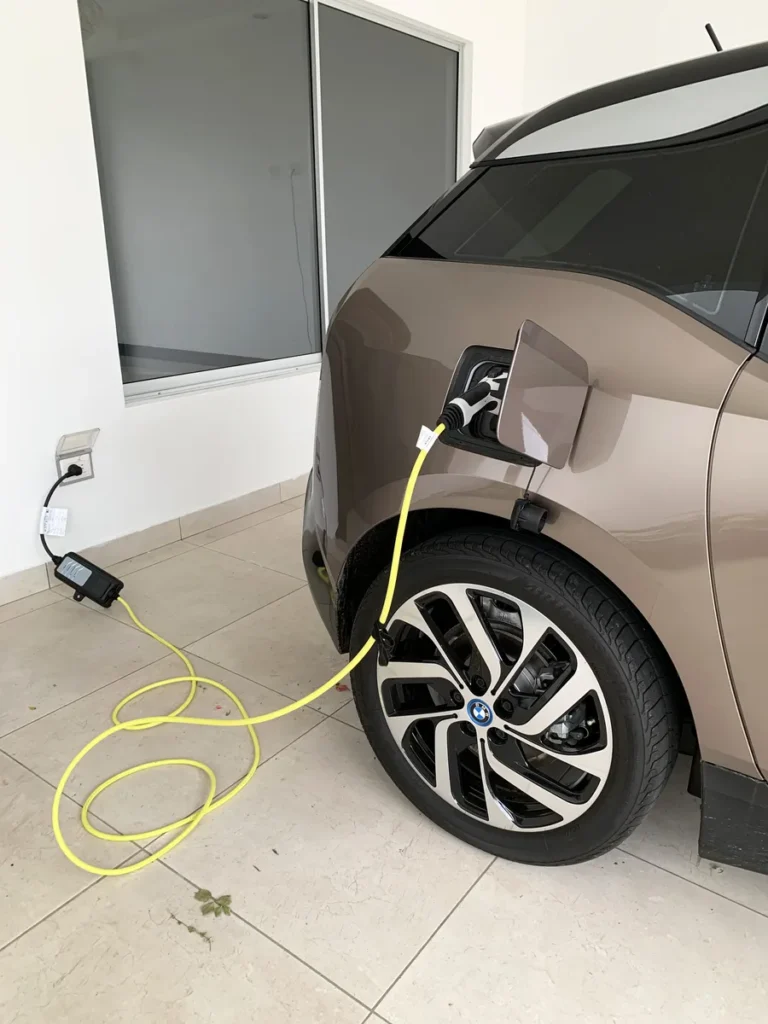
A portable charger is a charging cable with its control box built in. On a standard 120 V outlet it charges at Level 1; on a 240 V outlet such as a NEMA 14-50 it charges at Level 2. It goes with you when you move or travel, but the outlet and its circuit set the speed and the safety, so the receptacle matters as much as the charger. For a unit fixed to the wall, see Level 2 chargers (J1772) or Tesla & NACS chargers.
Canadian-sold, CSA-stated cord with 120/240 V adapters and app current control
Full 40 A from a NEMA 14-50 outlet in a cord you can pack
Swappable plug adapters give 12–32 A from 120 V or 240 V outlets
Each pick, and the outlet it needs, is explained in the best portable EV chargers. Not sure you need 240 V at all? Read Level 1 vs Level 2 charging.
3 chargers, sorted by our score
40 A max · 16 ft cable · 2-yr warranty
40 A max · 16 ft cable · 2-yr warranty
32 A max · 18 ft cable · No app (plug and charge) connectivity
Yes, if it plugs into a properly installed, heavy-duty outlet on its own circuit and runs at the current the manual allows for it. Check the plug and outlet for heat, and have a worn or loose outlet replaced by an electrician.
No. Charger manuals and safety authorities say never to use extension cords, power strips or plug converters with an EV charger. Choose a charger with a longer cable, or have an outlet installed closer to where you park.
Only with the charger maker’s own adapter for that outlet type, such as a NEMA 14-30, at the lower current it sets. Have an electrician check the outlet and circuit first: dryer outlets are often old or shared.
A dual-voltage charger works on a 120 V household outlet and on a 240 V outlet with the maker’s plugs. Level 1 adds only a few miles of range per hour, so most daily drivers want the 240 V outlet.
Look for the certifier’s mark (UL, ETL, CSA) and a file or control number on the unit’s label, and check it in the certifier’s online directory. In Canada the mark must come from a body accredited by the Standards Council of Canada.
Image credits: Mariordo (Mario Roberto Durán Ortiz), CC BY-SA 4.0
